
2023年12月6日發(作者:感動服務)
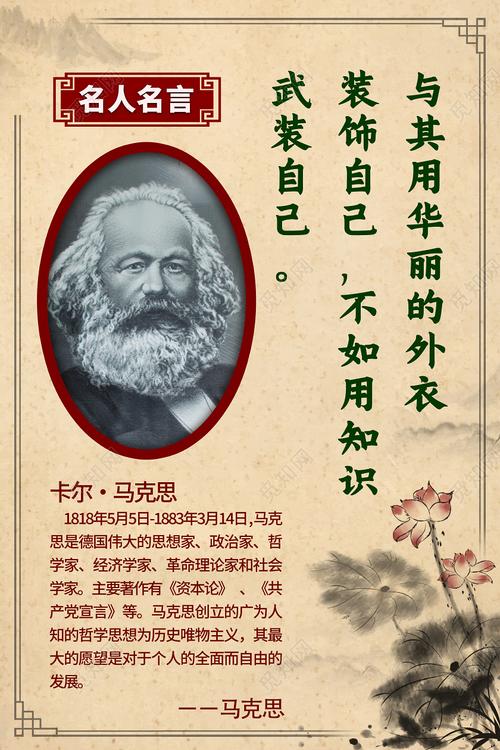
科技手抄報邊框,科技手抄報花邊簡單又漂亮
不要以為一張好看的手抄報只要能寫一手好字就能行哦,還得懂得動筆畫畫才行,當然手抄報花邊也是不可缺少的啦,本
文(科技手抄報邊框)由店鋪整理,歡迎閱讀。
科技手抄報邊框
【一個新的太陽現象:太陽大氣層中的爆炸沖擊波】
由美國洛克希德馬丁公司先進技術中心的Nariaki Nitta和德國普朗克研究所太陽系統研究項目(MPS)的Radoslav Bucík領
導的兩組科研人員,各自獨立地發現了一個新的太陽現象:恒星大氣層中的大尺度爆炸波,這種爆炸波伴隨著富含氦-3的高能
粒子噴射。氦-3是惰性氣體氦氣的同位素氣體。巨大的爆炸波有助于加速粒子向太空中的排放,MPS項目科學家們已經將這
份報告發表在了《天體物理學》期刊上。這個決定性的發現要歸功于兩艘太空船STEREO A和 ACE,它們幫助科學家同時從
兩個不同的方向上觀測太陽。而在不就以后,這種難得的觀測機會就不會出現了。
太陽是一個高爆發的恒星:在劇烈爆發期,它一次次地向太空中噴射高能粒子和射線。其中的一個例子就是日冕物質拋射
(CME),拋射出來的物質主要是電子和質子組成的等離子,還有少量的重元素,以及在短時間內釋放出大量能量的X射線耀
斑。這兩種現象都與太陽爆發有關。兩組研究人員利用觀測數據,各自獨立地發現了一個全新的太陽噴射方式:太陽大氣層中
的大型爆炸波,并伴隨富含氦-3的高能粒子流。這個爆炸波可以通過觀測強烈紫外線下的太陽大氣層進行追蹤。
2010年1月26日到2月2日的監測數據顯示,爆炸波延伸了至少50萬公里,并以大約每秒300公里的速度在傳播。它們在一
個弱的X射線爆發后馬上發生,但是與典型的噴射狀輻射有著顯著的不同。沒有發現日冕拋射物質觸發了這個爆炸波的證據。
“這個新現象就像是某種爆炸,”Bucik說,他領導了MPS項目研究,也是約翰霍普金斯大學,以及美國噴氣推進實驗室的專
家。
爆炸波發生的同時,太陽向太空噴射富含氦-3的高能粒子流。太陽的這種粒子噴射已經為所大眾熟知,但是其機理還沒有
得到充分的解釋。“我們相信爆炸波加速氦-3排放,”MPS項目研究人員戴維娜 英尼斯說。“我們的分析已經查明典型的爆炸波
性質,例如它們的能量,粒子性質的影響,”戴維娜的同事,也是MPS項目的研究人員Lijia Guo補充道。可是,這個爆炸波是
如何發生的,尚不清楚。
為了觀察爆炸波的現象和氦-3的物質拋射以及兩者之間的聯系,對于太陽的雙重觀測是非常必要的。由于太陽自轉,噴射
出的粒子離開恒星的軌跡是一個曲線彈射,有點像草坪上旋轉的灑水器。因此,到達地球的粒子來自于太陽的右側(從地球上
觀測)。而這個區域在地球上不能清楚地被觀測到。
“STEREO A是太空中唯一的太陽觀測平臺,它并不靠近地球,只是圍繞太陽運轉,” Bucik解釋道。在2010年初,太空飛
船正好位于太陽右側的上方。而當時,ACE的軌道接近地球,因此能夠觀測到粒子流,STEREO A記錄了粒子流產生的區域
——也就是EUV爆炸波。
研究人員認為,這種新現象并不罕見,但迄今為止還沒有得到很好的觀測。”不幸的是,在可預見的將來,這種觀測將不
再有機會發生”, bucik說。
STEREO A是美國宇航局2006年發射的兩個探測器中的一個。這個探測器,稱為A和B,圍繞著太陽反方向運轉,使我們
能夠從三維角度觀測這顆恒星。由于去年十月份,STEREO B的通信中斷,STEREO A只能繼續獨立地開展工作。到2025年
它才會再一次到達和2010年一樣的理想觀測位置。ACE(要素/同位素成分高級探測器)是美國宇航局的太空船。從1997年以
來,它一直在地球附近的一個觀測點研究太陽、宇宙和星際粒子。
Blast waves in the sun's atmosphere
Two teams of rearchers led by Nariaki Nitta from the Lockheed Martin Advanced Technology Center in the USA and
by Radoslav Bucík from the Max Planck Institute for Solar System Rearch (MPS) in Germany have independently
discovered a new solar phenomenon: large-scale waves in the star's atmosphere accompanied by energetic particle
emissions rich in helium-3. Helium-3 is a light variety of the inert gas helium. The huge waves may contribute significantly to
accelerate the particles into space, the MPS scientists now report in the Astrophysical Journal. Decisive for this discovery
were the two spacecraft STEREO A and ACE making it possible to simultaneously obrve the sun from two different
directions. In the near future, no such opportunity will ari again. The sun is a highly eruptive star: Again and again it emits energetic particles and radiation into space in violentoutbursts. Examples of outbursts are the coronal mass ejections (CMEs) where a plasma of electrons, protons, and a fewheavy atoms is hurled into space, as well as short, collimated X-ray flares. Both phenomena occur in connection with so-called solar eruptions. Two rearch groups have now independently discovered a completely new type of solar ejection inobrvational data: large wave fronts in the sun's atmosphere together with particle flows rich in helium-3. The waves couldbe tracked down by looking at the sun's atmosphere in extreme ultraviolet light. The waves detected in data from 26 January and 2 February 2010 extended over at least half a million kilometers andpropagated at a speed of approximately 300 kilometers per cond. They occurred shortly after a weak X-ray flash, but differsignificantly from this typical jet-like form of radiation. Coronal mass ejections as a trigger of the waves were not obrved."The new phenomenon is like a kind of explosion," said Bucik, who headed the team of rearchers at the MPS, the JohnsHopkins University, and the Jet Propulsion Laboratory in the US. Simultaneously with the blast waves, the sun hurls a particle stream rich in helium-3 into space. Particle emissions ofthis kind have been well-known for years, but could never be fully explained. "We believe that the blast waves accelerate thehelium-3", says Davina Innes from the MPS. "Our analysis shows that typical characteristics of the waves, such as theirenergy, influence the properties of the particles", adds her colleague Lijia Guo, also stationed at the MPS. However, howexactly this works, is still unclear. In order to obrve both the wave phenomenon and the helium-3 ejections and so to recognize the connection betweenthe two, a two-fold look at the sun was necessary. Since the sun rotates, ejected particles leaving the star travel on a curvedtrajectory similar to the water jets of a rotating lawn sprinkler. The particles reaching Earth have, therefore, originated on theright side of the sun (as en from Earth). This region is not clearly visible from Earth. "STEREO A is the only solar obrvatory in space, which does not remain clo to Earth, but travels around the sun,"explains Bucik. In early 2010, the spacecraft was located exactly above the right limb of the sun. While ACE orbiting clo toEarth could detect the particle streams, STEREO A yielded recordings of the region where they originated – and thus of theEUV blast wave. The rearchers believe that the new phenomenon is not rare, but could so far not be well obrved. "Unfortunately,however, in the foreeable future the necessary viewing geometry will not occur again", says Bucik. STEREO A is one of NASA'S twin space probes launched in 2006. The probes, called A and B, circle the sun inopposite directions thus allowing for a three-dimensional look at our star. Since the loss of communication with STEREO Blast October, STEREO A has continued its obrvations alone. In 2025 it will reach the same favorable viewing positionagain as it had 2010. ACE (Advanced Composition Explorer) is a NASA spacecraft. Since 1997 it has been studying solar,cosmic, and interstellar particles from an obrvation site near Earth.
本文發布于:2023-12-06 16:24:54,感謝您對本站的認可!
本文鏈接:http://m.newhan.cn/zhishi/a/1701851095112937.html
版權聲明:本站內容均來自互聯網,僅供演示用,請勿用于商業和其他非法用途。如果侵犯了您的權益請與我們聯系,我們將在24小時內刪除。
本文word下載地址:科技手抄報邊框,科技手抄報花邊簡單又漂亮.doc
本文 PDF 下載地址:科技手抄報邊框,科技手抄報花邊簡單又漂亮.pdf
| 留言與評論(共有 0 條評論) |
